

Boiler Maintenance in September: 6 Checks to Get Your Kent Home Ready for Autumn
Meta description: Prepare your Kent home for autumn with six practical boiler maintenance checks from CPH Services, including servicing, pressure and safety tips.
September is the right time to think about your boiler. The weather may still feel mild across Sheerness and Kent, but colder mornings and longer evenings are approaching quickly.
A boiler that has been sitting quietly through summer can develop problems when you start relying on it every day. A small pressure issue, trapped air in a radiator or an overdue service can become a frustrating breakdown at the worst possible time.
The good news is that a few straightforward checks can help you prepare. Below, we explain six practical boiler maintenance checks for homes in Sheerness, ME9, ME10, ME12 and the surrounding Kent areas.
If you notice anything unusual, our Gas Safe registered engineers can provide clear advice, efficient repairs and tidy workmanship from start to finish.
1. BOOK YOUR BOILER SERVICE BEFORE THE WINTER RUSH
An annual boiler service is one of the most important checks you can arrange before autumn becomes winter. It gives a qualified engineer the opportunity to inspect the boiler properly, identify developing faults and confirm that the appliance is operating safely.
A professional service will usually include checks such as:
Boiler performance and combustion
Flue condition and integrity
Burner and internal components
Safety controls and valves
Gas pressure and operating pressure
Condensate drainage
Signs of corrosion, leaks or wear
Homeowners are strongly advised to service gas appliances every year, while landlords have legal responsibilities to arrange annual gas safety checks and provide the relevant certificate.
All gas work must be completed by a suitably qualified Gas Safe registered engineer. You can find out more through the Gas Safe Register. At CPH Services, our engineers are Gas Safe registered under registration number 198217.
Booking in September also gives you more time to deal with any recommended repairs before the colder weather arrives. It is a simple way to gain peace of mind and reduce the chance of an unexpected emergency call-out.

2. TEST YOUR HEATING AND BLEED COLD RADIATORS
Before the first genuinely cold day, turn your heating on for around 15 to 30 minutes. Walk around the property and check that each radiator is warming up as expected.
Look out for:
A radiator that stays cold
A radiator that is hot at the bottom but cold at the top
Gurgling or bubbling noises
Radiators that need longer than usual to heat
Thermostatic radiator valves that will not turn
A radiator that is cold at the top may simply contain trapped air. You can usually bleed it using a radiator key, but always switch the heating off first and allow the radiator to cool.
Turn the bleed valve slowly until you hear air escaping. Close it when water begins to come out steadily. After bleeding radiators, check your boiler pressure again, as it may have dropped slightly.
Keep radiators clear of large furniture, curtains and drying clothes wherever possible. Good airflow helps heat move around the room more effectively and can support a more efficient heating system.
For more heating advice, visit our heating and plumbing service page.
3. CHECK THE BOILER PRESSURE
Most modern sealed central-heating systems have a pressure gauge on the front of the boiler. When the system is cold, the pressure is commonly expected to sit around 1.0 to 1.5 bar, although you should always check your boiler manual for the correct range.
Pressure that is too low can cause:
Poor radiator performance
Boiler lockouts
Reduced hot-water performance
Warning lights or fault codes
If the pressure is too high, or the gauge is in the red section, the boiler may release water through its pressure relief system. High pressure can also point to a fault that needs professional attention.
Some boilers can be topped up using a filling loop. Only do this if you understand the process and are following the manufacturer’s instructions. If the pressure keeps falling after topping up, there may be a leak or an internal issue.
Do not repeatedly reset a boiler or keep adding pressure without finding out why the problem is happening. A qualified engineer can investigate the cause and provide a straightforward repair.
4. INSPECT THE CONDENSATE PIPE AND OUTSIDE AREA
Modern condensing boilers produce condensation as they operate. This water normally leaves the boiler through a plastic condensate pipe, which often runs to an outside drain.
During very cold weather, this pipe can freeze. When that happens, the boiler may shut down or display a fault code.
In September, check that:
The condensate pipe is visible and free from damage
External sections are properly insulated with suitable weatherproof lagging
The pipe runs to a clear drain
Leaves and debris are not blocking nearby drainage
The boiler flue outlet is not obstructed by plants, storage or other objects
If a condensate pipe freezes, it may be possible to thaw it with warm water. Do not use boiling water, as this can damage the pipe. If you are unsure where the pipe is or the boiler does not restart afterwards, contact a Gas Safe registered engineer.
Never remove the boiler casing or attempt to alter the flue yourself. These parts are essential to safe operation and must be checked by a qualified professional.
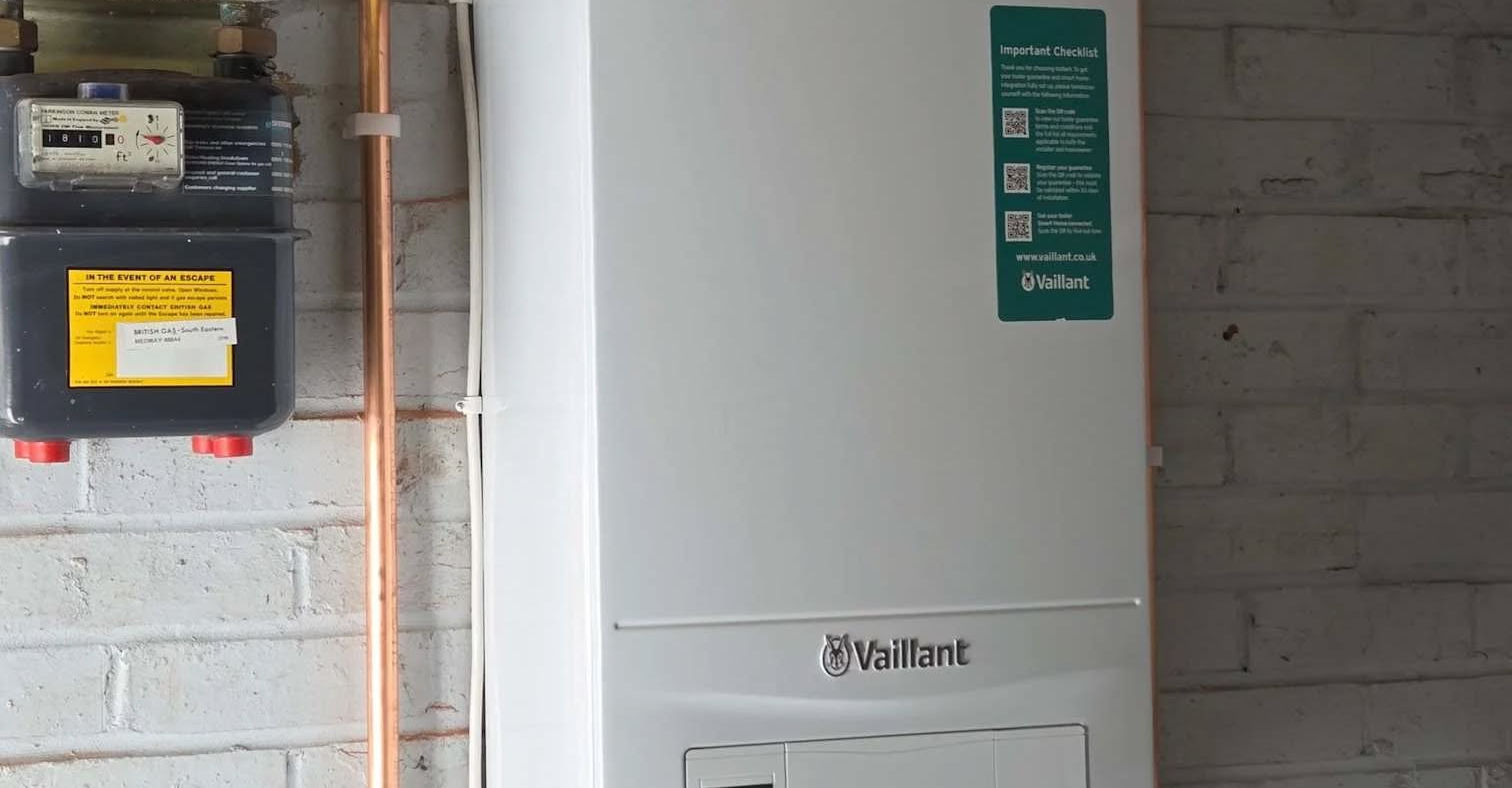
5. LISTEN FOR WARNING SIGNS AND RECORD ERROR CODES
Your boiler may provide early warning that something is not working correctly. Strange sounds should not be ignored, especially if they are new or becoming more frequent.
Contact an engineer if you notice:
Banging or kettling noises
Whistling sounds
Repeated clicking
Gurgling from the boiler or radiators
A pilot light that keeps going out
A boiler that switches off unexpectedly
Water leaks or damp patches
Rust, staining or corrosion around visible pipework
If your boiler shows an error code, write it down or take a photograph of the display. The code can help an engineer identify the problem more quickly.
You can try a single reset if the manufacturer’s instructions allow it. However, repeated resets may only hide the fault temporarily. If the boiler continues to lock out, it is safer to arrange a professional inspection.
This is particularly important for older boilers. If your boiler is regularly breaking down, becoming increasingly expensive to run or struggling to heat the home, a replacement may be more sensible than continuing with repairs.
Our boiler installation service in Kent includes advice on suitable systems, heating connections, pipework upgrades, safety checks and a clear handover. For anyone researching boiler installation Kent, we provide a start-to-finish service with transparent pricing and no hidden costs.
6. TEST YOUR CARBON MONOXIDE ALARM
Carbon monoxide is colourless and odourless, so you cannot rely on your senses to detect it. A working carbon monoxide alarm provides an important additional safety measure in any room containing a gas boiler or other fuel-burning appliance.
In September, press the test button on your alarm and check that:
The alarm sounds clearly
Batteries are working
The unit is within its recommended service life
It has not been covered or blocked
Everyone in the property can hear it
Follow the manufacturer’s instructions when positioning and replacing the alarm. Landlords have specific legal responsibilities for carbon monoxide alarms in applicable rooms, while all households should take CO safety seriously.
The London Fire Brigade’s carbon monoxide safety guidance provides further advice on alarms and warning signs.
If a carbon monoxide alarm sounds, leave the property immediately if it is safe to do so, ventilate the building from outside if possible and contact the National Gas Emergency Service on 0800 111 999. Do not use the appliance again until it has been checked by a qualified engineer.
SMALL CHANGES CAN IMPROVE AUTUMN EFFICIENCY
Once your boiler and radiators have been checked, review your heating controls. Set your timer to match your routine, use thermostatic radiator valves to control individual rooms and keep your main thermostat at the lowest comfortable temperature.
The Energy Saving Trust offers useful guidance on heating controls and reducing energy use.
If your radiators are unbalanced, your home has cold spots or your heating system is taking too long to warm up, we can investigate the underlying issue. We also provide radiator installation, pipework repairs and general heating maintenance.
If you are planning a wider home improvement project, it can be sensible to coordinate work at the same time. Our team can help manage related plumbing requirements while projects are being planned with bathroom fitters Kent, including radiator changes, pipework adjustments and boiler considerations.
PREPARE YOUR SHEERNESS HOME WITH CPH SERVICES
A September boiler check is a practical investment in comfort, safety and peace of mind. It helps you identify problems while they are still manageable and gives you confidence that your heating system is ready for the season ahead.
At CPH Services, we bring more than 25 years of hands-on experience to homes and businesses across Sheerness and Kent. Our approach is professional, respectful and straightforward:
Gas Safe registered engineers
Emergency response available
Transparent pricing with no hidden costs
Thorough safety and performance checks
Neat, tidy work from start to finish
Reliable advice on repairs and replacements
If you have been searching for plumbers Sheerness homeowners can rely on, we are ready to start a conversation. Contact CPH Services to book a boiler service, discuss a repair or request a free quote.
Comments